


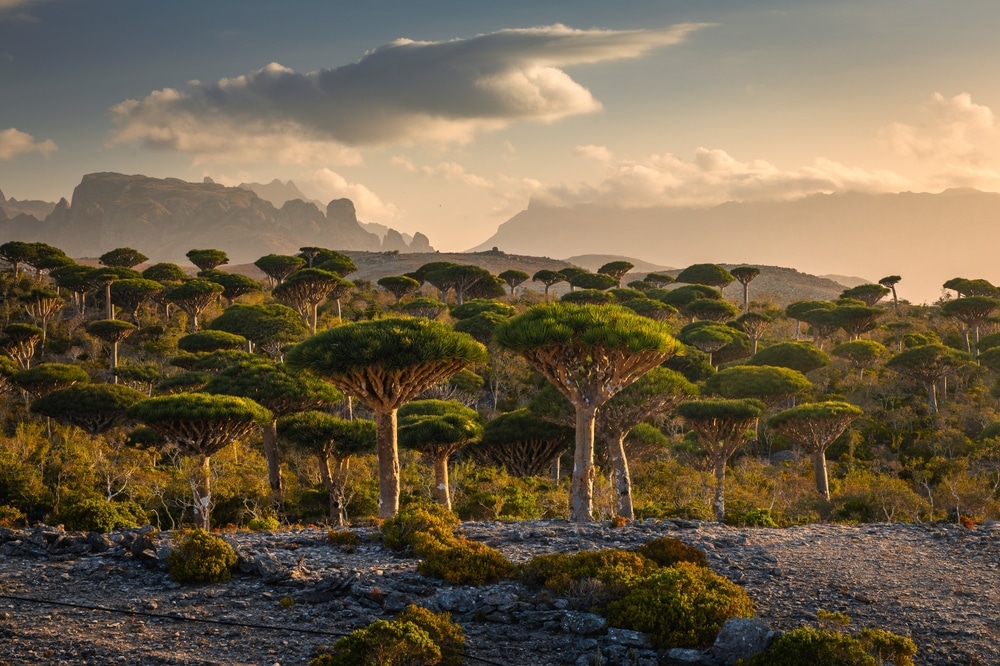
If you have ever wondered whether another planet might secretly exist on Earth, you should learn about socotra island. This remote place in the Arabian Sea looks so strange that many visitors say it feels like walking through an alien landscape. Towering dragon’s blood trees, bottle shaped trunks, bright white dunes, and turquoise water give the island an otherworldly atmosphere. Scientists often describe it as one of the most unique ecosystems on the planet. The best part is that this surreal destination is not fictional or unreachable. Travelers can actually visit it, explore it, and see its strange natural beauty with their own eyes.
Where socotra island sits in the world
Socotra island lies in the Arabian Sea between the Horn of Africa and the Arabian Peninsula. Politically it belongs to Yemen, although geographically it sits much closer to Somalia. The island is about 380 kilometers south of mainland Yemen and is part of the Socotra archipelago, which includes several smaller islands nearby.
Because of its isolation, this place developed in a very different way from most other parts of the world. Over millions of years, plants and animals evolved here without much outside influence. That isolation helped create ecosystems that scientists sometimes compare to the Galápagos Islands.
The climate is hot and dry for much of the year, but seasonal monsoon winds shape life here dramatically. During strong monsoon months, the seas around the island become extremely rough. For centuries this made travel difficult and helped preserve the island’s natural environment from heavy development.
Scientists often explain that the remote nature of socotra island is one of the main reasons it still looks so wild today.
A landscape that looks like science fiction
Many people first discover this destination through photographs. The landscapes seem almost unreal. The most famous natural feature is the dragon’s blood tree, which looks like a giant green umbrella turned inside out.
These trees have thick trunks and wide canopies that form a mushroom like shape. When the bark is cut, it produces a deep red sap that historically was used as medicine, dye, and incense. Because of this red resin, the trees earned their dramatic name.
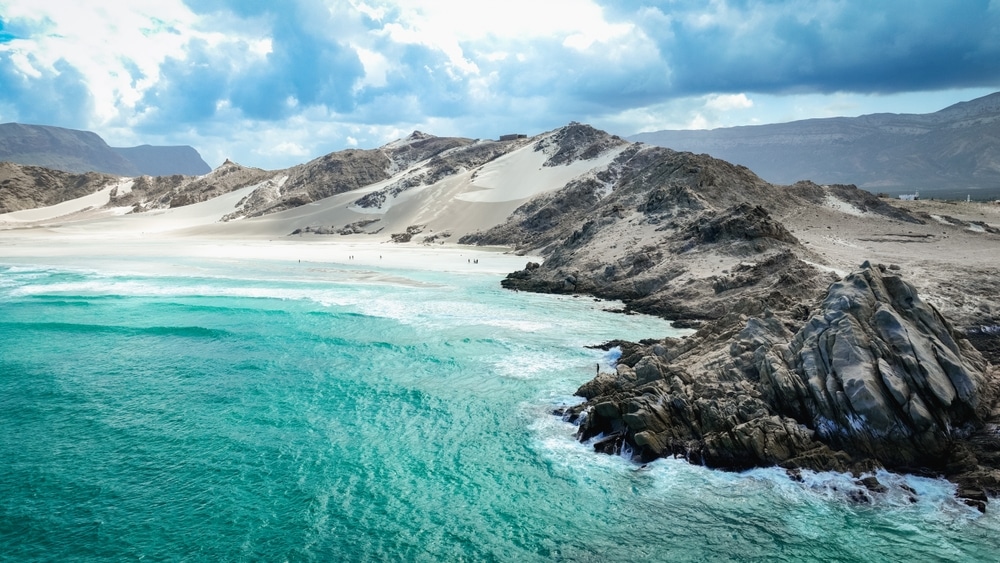
Alongside these strange trees, the terrain includes rocky plateaus, limestone caves, towering cliffs, and coastal plains. White sand beaches meet clear blue water that rivals many tropical destinations.
The unique plant life is what really makes socotra island feel like a different world. Around one third of the plant species found here exist nowhere else on Earth. Scientists call this high level of uniqueness endemism, and it makes the island extremely valuable for biological research. Many travelers describe their first view of the island’s strange forests as something that looks closer to a movie set than a natural landscape.
Plants found nowhere else on Earth
One of the biggest reasons researchers are fascinated by socotra island is its remarkable plant diversity. More than 800 plant species grow here, and many evolved in complete isolation.
Besides the dragon’s blood tree, another famous plant is the desert rose of Socotra. This tree has a thick swollen trunk that stores water, while delicate pink flowers bloom on top. The trunk can look almost like a sculpted bottle rising from the ground.
Another unusual species is the cucumber tree. Despite the name, it does not grow edible cucumbers. Instead it produces small cucumber shaped fruits while standing on a thick trunk and twisting branches.
These strange adaptations help plants survive the island’s dry climate and strong winds. Over thousands of years, natural selection shaped them into forms rarely seen anywhere else.
Because of this incredible biodiversity, socotra island was designated a UNESCO World Heritage Site in 2008. The designation recognizes how important the island is for global conservation and scientific study.
Unique animals and wildlife
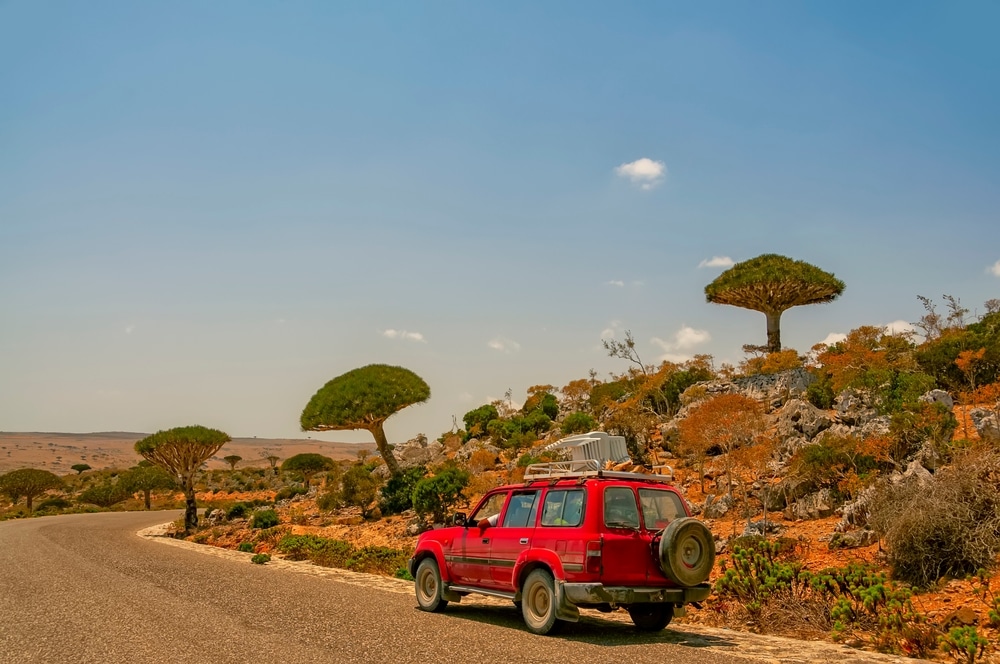
While plants often get the most attention, the wildlife here is also impressive. The island hosts many bird, reptile, and insect species that live nowhere else.
Birdwatchers are particularly drawn to the area because several endemic birds live here, including the Socotra sunbird, Socotra starling, and Socotra bunting. Their bright colors and distinctive calls make them easy to spot in the island’s forests and mountains.
Reptiles are another interesting part of the ecosystem. Many gecko and skink species evolved specifically for this environment. Some have adapted to rocky cliffs, while others live among desert plants.
Marine life surrounding socotra island is equally rich. Coral reefs support fish, sea turtles, and other ocean species. Because the surrounding waters remain relatively untouched by mass tourism, they are considered some of the healthiest reefs in the region. Scientists continue discovering new species here, which shows how much of the island’s biodiversity still remains unexplored.
The people and culture of the island
Life for the residents of socotra island has always been shaped by isolation. Around 60,000 people live here, most of them belonging to small fishing and herding communities.
The local population speaks the Socotri language, which is different from standard Arabic and has ancient roots in South Arabian languages. Much of the culture revolves around fishing, goat herding, and small scale agriculture.
For centuries, the island served as a stop for traders traveling between Africa, Arabia, and India. These trade routes brought occasional outside influence while still leaving the island relatively remote.
Traditional knowledge about plants is especially strong among local communities. Many residents know which plants can be used as medicine, food, or building material. Even today, daily life moves at a slower pace than in many parts of the world, giving visitors a glimpse into a lifestyle closely connected to nature.
Why travelers are starting to visit
For a long time very few tourists reached socotra island because travel logistics were complicated. Flights were limited and political instability in the region discouraged visitors.
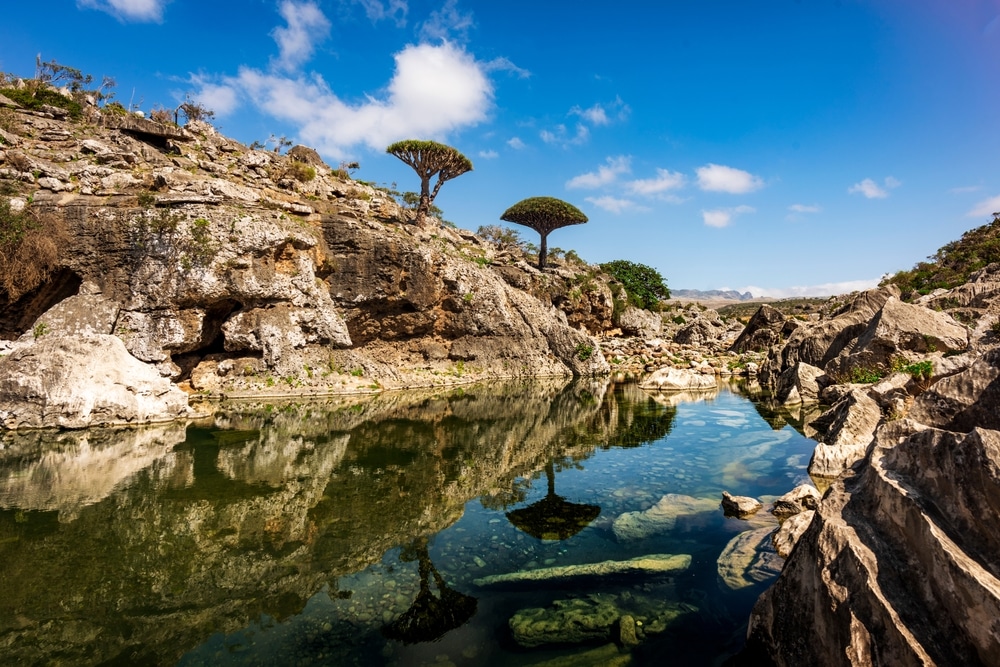
However, in recent years adventurous travelers and nature photographers have begun discovering the island’s beauty. Small guided tours now bring visitors who want to explore its landscapes responsibly.
Activities often include hiking through dragon’s blood tree forests, camping on empty beaches, visiting sand dunes, and exploring limestone caves. The night sky is also spectacular because light pollution is almost nonexistent.
Despite growing interest, tourism remains limited compared to many other destinations. This helps preserve the island’s fragile ecosystems. Visitors often say that traveling to socotra island feels less like a typical vacation and more like stepping into one of the last untouched environments on Earth.
Conservation challenges and protecting the future
Although the island is still relatively pristine, conservationists warn that its ecosystems are fragile. Climate change, invasive species, and unsustainable development could threaten the unique environment.
Goats introduced centuries ago sometimes damage young plants by grazing on them before they can mature. Extreme weather events linked to climate change have also caused damage to forests in recent years.
Organizations working with local communities aim to protect the environment while supporting sustainable livelihoods. Education programs teach residents and visitors about preserving biodiversity. Carefully managed tourism may also help fund conservation efforts while keeping environmental impact low.
The future of socotra island will depend on balancing development with protection. Because the ecosystem evolved over millions of years, even small disruptions could have lasting consequences.
Few places on Earth capture the imagination like socotra island. Its strange trees, rare plants, and isolated landscapes make it feel like a lost world hidden in the Arabian Sea. Yet it remains a real destination that curious travelers can experience firsthand. Visiting responsibly helps ensure that its fragile ecosystems remain intact for future generations. Whether you are a nature lover, photographer, or simply someone fascinated by unusual places, this island offers something unforgettable. In a world where many destinations feel crowded or familiar, socotra island still holds the rare magic of discovery.
Not done yet? Do you want more inspiration for your next amazing vacation? Then visit our epic destination page here.