


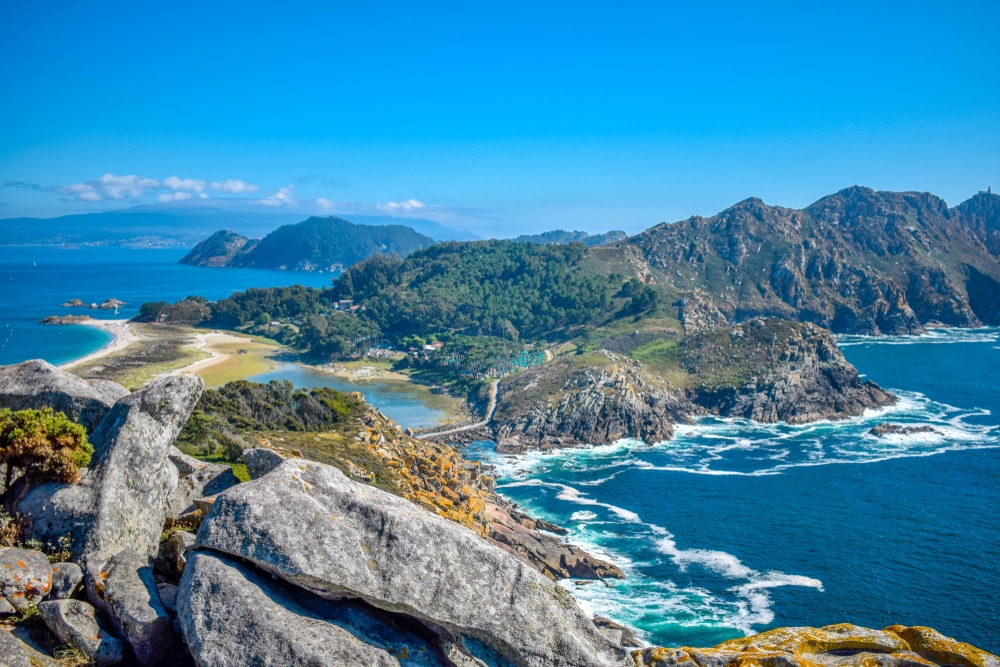
If someone told you that one of the most breathtaking beaches in the world isn’t in the Caribbean but in Spain, you might raise an eyebrow. Yet there it is—hidden along the rugged Galician coastline, a slice of pure tropical fantasy that has left travelers speechless for decades. The Cíes islands are often called “the Caribbean of Europe,” and once you see them, the comparison suddenly feels almost too small.
Turquoise water so clear it looks filtered, white-sand beaches that squeak beneath your feet, a national park so pristine it feels untouched by time—this is Europe’s version of paradise, and it’s within easy reach of anyone willing to hop on a ferry.
The surprising part? Despite their beauty, the Cíes remain relatively unknown outside of Spain. They lack the overwhelming crowds of Mallorca, Ibiza, or Tenerife. Instead, they offer something more rare: calm, crystalline water, perfect hiking trails, wildlife you won’t find anywhere else, and beaches officially named among the most beautiful in the world. It’s a place where nature comes first and mass tourism takes a polite step back.
In this guide, we’ll explore what makes these islands so magical, why people compare them to tropical destinations thousands of kilometers away, and how you can make the most of your visit. Let’s dive into Europe’s Caribbean paradise.
What Makes the Cies Islands Feel Like the Caribbean?
The first thing you notice when the ferry approaches the Cíes is the color of the water. It’s the kind of blue you’d expect to see in travel brochures for the Maldives or Jamaica—shallow, shimmering, and impossibly clear. As the islands come into view, the pale sand glows white in the sunlight, creating a surreal contrast with the deep green pine forests behind it. It’s no wonder that Rodas Beach, the most famous one on the islands, was once ranked “the best beach in the world” by The Guardian.
But the real secret behind the Caribbean comparisons lies in how untouched the islands are. The Cíes form part of the Atlantic Islands of Galicia National Park, a protected reserve with strict rules that limit tourism, preserve wildlife, and maintain the islands’ natural beauty. There are no cars, no large hotels, no neon tourist strips—just pristine landscapes, peaceful trails, and the quiet hum of nature.
Their location also plays a role. Nestled at the mouth of the Ría de Vigo, the islands sit where the Atlantic converges with sheltered coastal waters, creating a unique micro-environment that enhances the clarity and color of the sea. Combine that with their crescent-shaped beaches and you get visuals that look straight out of a Caribbean postcard.
Exploring the Cies Islands
The Cies islands consist of three main islands—Monteagudo, Faro, and San Martiño—each with its own rugged charm and breathtaking landscapes. The two northern islands, Monteagudo and Faro, are connected by the famous Rodas Beach, forming a natural lagoon that has become the signature image of the archipelago. San Martiño lies to the south, accessible only by private boat, and remains even more secluded and wild.
All three islands are part of a protected national park, which means every step you take is surrounded by nature in its purest form. Ancient cliffs rise above emerald waters. Dense pine and eucalyptus forests perfume the air. Seabirds fill the skies—most notably the rare yellow-legged gulls and shag colonies.
Because the islands allow only a limited number of daily visitors, they never feel crowded. This limited access helps preserve the delicate ecosystems, and it ensures that tourists can enjoy a sense of calm that’s becoming increasingly rare in Europe’s popular coastal destinations.
Whether you’re here for the beaches, the hiking, the wildlife, or simply to unwind, the Cíes offer a blend of tranquility and natural beauty that feels far away from the mainland—even though Vigo is only a short ferry ride away.
Stunning Beaches That Rival the Tropics
The beaches of the Cíes are the stuff of legend—not just in Spain, but around the world. They combine silky, white sand with crystal-clear water and dramatic backdrops of forest, cliffs, and rocky coves. If you’re a beach lover, this is as close to perfection as Europe gets.
Praia de Rodas
Often described as “like something from the Caribbean,” Rodas Beach is the star of the Cíes. This long, curving stretch of powdery sand forms a natural bridge between two islands, creating a calm, shallow lagoon on one side and sweeping Atlantic views on the other. The water is vibrant and transparent, perfect for swimming or wading—though you should be prepared for a refreshing temperature even on warm days.
The scenery here is so striking that Rodas has become one of Europe’s most photographed beaches. Yet thanks to visitor limits, it never feels overrun.
Praia de Figueiras
If you crave a quieter, more intimate setting, Figueiras Beach is ideal. Tucked into a deep cove surrounded by cliffs and pine forests, it offers shelter from the wind and fewer crowds. It’s also known as a naturist-friendly beach, though all visitors are welcome. The water here tends to be calm and clear, making it a peaceful alternative to Rodas.
Praia de Nosa Señora
For families, Nosa Señora is a dream beach. The water is shallow, the waves gentle, and the views spectacular. It’s a great spot for snorkeling, thanks to the rocky areas nearby where fish and marine life cluster. If you’re visiting with children or simply want a relaxing beach day, this spot delivers.
Each of these beaches offers something different—yet all share the same breathtaking Caribbean-like beauty that defines the islands.

How to Get to the Islands (and What to Know Before You Go)
Reaching the Cíes is surprisingly easy, but because the islands are protected, you need to plan ahead. Ferries run seasonally—primarily during spring, summer, and early autumn—from several towns along the Galician coast.
Ferry from Vigo, Cangas, or Baiona
Vigo is the most common departure point, with ferries taking around 40 to 50 minutes. Boats also leave from Baiona and Cangas, offering similar travel times. The experience is smooth and scenic, giving you great views of the coastline as you approach the archipelago.
Ferries often sell out in summer, especially on weekends. Booking early is strongly recommended.
Visitor Permits
Because the islands sit within a national park, a special visitor permit is required. The daily visitor limit is strict, meaning only a certain number of tourists can set foot on the islands each day. To get this permit:
- Reserve your authorization online in advance.
- Then book your ferry ticket using that authorization code.
This two-step process protects the fragile ecosystem but also ensures visitors enjoy a calmer, more natural experience.
The Best Things to Do on the Cies Islands
The beaches alone are worth the journey, but the islands offer so much more. From sweeping viewpoints to wildlife encounters, you’ll find endless ways to enjoy nature without ever feeling rushed.
Hiking the Famous Lighthouse Trail
The Cíes are home to several incredible hiking routes, with the Faro de Cíes lighthouse trail being the most iconic. The walk takes you through forests, rocky ridges, and panoramic viewpoints before ending at the lighthouse perched atop Monte Faro. From here, the views stretch endlessly over the Atlantic Ocean—dramatic, wild, and unforgettable.
The hike is moderate in difficulty and takes around 2.5 to 3 hours round-trip. Wear comfortable shoes and bring plenty of water, especially in the summer.
Wildlife Watching
As part of a protected reserve, the islands are a haven for wildlife. You’ll spot seabirds everywhere—particularly the yellow-legged gull, which thrives here. You may also see cormorants, petrels, and even dolphins off the coast if you’re lucky.
On land, rabbits, lizards, and small mammals roam freely. Underwater, colorful fish flit among rocks and seaweed forests.
Snorkeling and Swimming
The water is clear, calm, and ideal for snorkeling. While it’s cooler than typical tropical destinations, visibility is outstanding. You’ll find marine life near rocky areas around Nosa Señora and the edges of Rodas Beach.
Swimming is refreshing but exhilarating—especially when the sun is high and the water sparkles like glass.
Photography and Scenic Viewpoints
Bring your camera (or keep your phone charged): the islands are unbelievably photogenic. Favorite vantage points include:
- The wooden lookout near Rodas Beach
- The cliffs above Figueiras
- The lighthouse viewpoints
At sunset, the islands take on an almost magical glow, with the sky turning soft shades of pink and orange over the Atlantic.
Where to Eat and Stay
Because the Cíes are a natural reserve, accommodations and dining options are intentionally limited. This is part of the charm: you’re here to disconnect and enjoy nature, not nightlife.
Camping on the Island
Camping is the only way to stay overnight on the islands, and it’s an experience you’ll never forget. The campsite is well-organized, with clean facilities, hot showers, and options to rent a tent if you don’t want to bring your own.
Waking up on the Cíes is magical—the morning light stretching across Rodas Beach, the sound of soft waves, the cool Atlantic breeze. It’s peaceful in a way most European beaches simply aren’t.
Food Options
There are a couple of basic restaurants and beach bars (chiringuitos) near Rodas Beach, but they operate seasonally and offer simple meals—think sandwiches, seafood, salads, and drinks. Prices are fair given the location.
For many visitors, bringing snacks or a picnic from the mainland is standard practice. There are designated picnic areas, and having your own supplies gives you more freedom, especially if you plan to spend the day hiking or moving between beaches.
When Is the Best Time to Visit?
The islands are accessible primarily from late spring to early autumn, though summer is the most popular period. That said, each season has its perks:
- Late spring (May–June): Warm weather, fewer visitors, vibrant greenery.
- Mid-summer (July–August): Hottest temperatures, best swimming conditions, but also the busiest — book very early.
- Early autumn (September): Still warm, fewer crowds, excellent for hiking and wildlife.
Even in August, the water tends to be cool due to the Atlantic, but this freshness is part of the Cíes experience.
Essential Travel Tips for First-Time Visitors
To make your visit smooth and enjoyable, keep these helpful pointers in mind:
- Bring everything you need: There are no supermarkets or shops, and food spots may be limited.
- Protect yourself from the sun: There’s plenty of open space, so hats, sunscreen, and water are essential.
- Wear comfortable footwear: Trails can be rocky and steep in parts.
- Respect nature: As a protected area, the islands have strict rules—no fires, no litter, no feeding wildlife, and no taking shells or plants.
- Charge your phone: There are no charging stations; a portable power bank is smart to bring.
- Book your ferry and permit early: Especially in July and August, when travel demand peaks.
Following these guidelines ensures you have a great time—and help keep the islands pristine for future visitors.
Why the Cies Islands Are Europe’s Secret Caribbean
It’s rare to find a place in Europe that feels both remote and easy to reach, wild yet welcoming, pristine yet accessible. The Cíes strike that delicate balance perfectly. Their beaches rival the best of the Caribbean, their landscapes feel untouched, and their quiet atmosphere offers a break from the noise and crowds of other tourist hotspots.
Whether you’re seeking a laid-back beach day, a scenic hike, a chance to reconnect with nature, or simply a place that makes you stop and say, “Wow”—this tiny Spanish archipelago delivers. The cies islands aren’t just a hidden gem; they’re a reminder that paradise isn’t always thousands of miles away. Sometimes, it’s just a short ferry ride off the coast of Spain.
If the Caribbean is out of reach or you’re simply craving something new, consider adding the Cíes to your travel plans. Once you set foot on those white sands and see that dazzling water, you’ll understand why travelers keep calling this place the Caribbean of Europe—and why they can’t wait to go back.