



There is a place in Japan where the forest floor glows green, where ancient cedar trees disappear into mist, and where silence feels almost sacred. It looks less like a real destination and more like a scene from an epic fantasy film. That place is Yakushima, a small island that seems to exist in its own timeless world. The moment you see photos of it, with thick moss climbing over twisted roots and fog drifting between towering trunks, it feels unreal. But Yakushima is very real — and it might just be one of the most magical landscapes on Earth.
Far removed from Tokyo’s neon skyline and Kyoto’s polished temples, this island offers something entirely different. It offers raw nature. Primeval forest. Rain-soaked trails. Air so clean it feels untouched. For travelers who crave something atmospheric and deeply immersive, Yakushima feels like stepping into another realm.
Where Is This Hidden Island in Japan?
Yakushima lies south of Kyushu, Japan’s southernmost main island, in Kagoshima Prefecture. Surrounded by the East China Sea, it is relatively small — about 500 square kilometers — but what it lacks in size, it more than makes up for in ecological richness and visual drama.
The island is mountainous, with peaks rising nearly 2,000 meters above sea level. Because of this steep terrain, weather patterns shift dramatically. Yakushima is famous for its rainfall. In fact, locals joke that it rains “35 days a month.” The frequent rain is not a drawback — it’s the reason the island looks the way it does. Constant moisture feeds an astonishing variety of plant life, creating one of Japan’s most remarkable moss-covered landscapes.
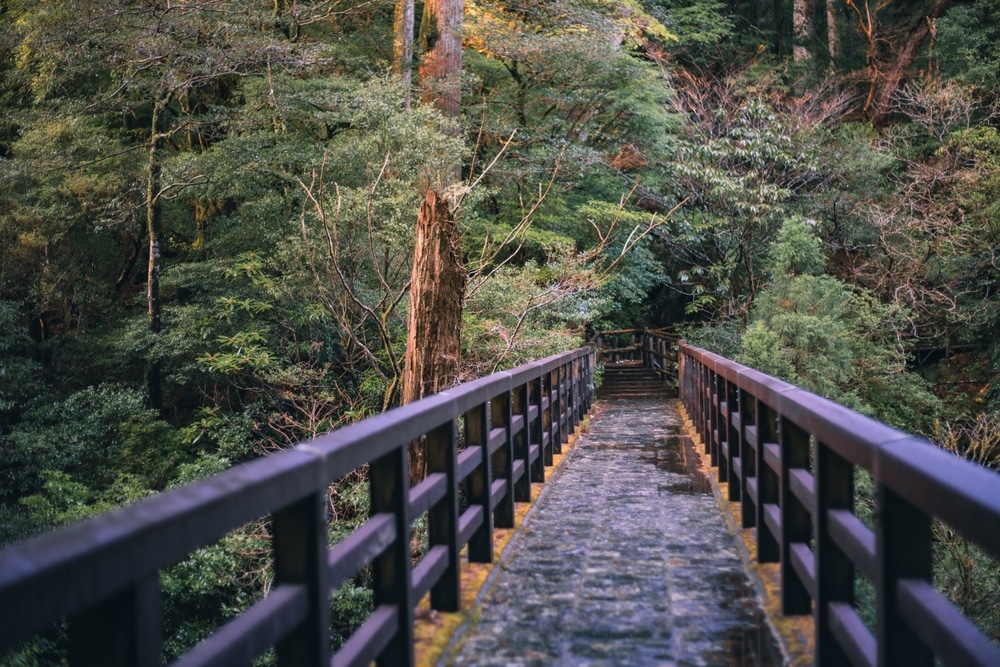
In 1993, yakushima was designated a UNESCO World Heritage Site due to its unique ecosystem and ancient forests. Parts of the island feel almost prehistoric, as if untouched by modern development. And unlike many well-known tourist spots in Japan, yakushima remains relatively quiet and uncrowded, preserving its mysterious atmosphere.
Beautiful Yakushima
What makes Yakushima truly extraordinary is its ancient cedar forest. The island is home to thousands of yakusugi — Japanese cedar trees that are more than 1,000 years old. Some estimates suggest that the oldest tree, known as Jōmon Sugi, may be between 2,000 and 7,000 years old. Standing before such a tree is a humbling experience. These giants were already ancient when civilizations elsewhere were just beginning.
The forest itself feels layered in time. Thick moss blankets rocks, tree trunks, fallen logs, and even exposed roots. More than 600 varieties of moss have been recorded here, creating a lush green carpet that stretches in every direction. This dense, velvety growth softens the entire landscape. Sharp edges blur. Colors deepen. Light filters gently through the canopy, casting everything in an emerald glow.
Yakushima’s ecosystem is also home to unique wildlife, including Yakushima macaques and Yakushima deer. These animals move quietly through the forest, often spotted along hiking trails. Because the island has limited urban development, encounters with wildlife feel natural and unforced.
The island’s haunting beauty famously inspired director Hayao Miyazaki during the creation of Princess Mononoke. The film’s ancient forest scenes closely resemble Yakushima’s misty cedar groves. When walking through the Shiratani Unsuikyo ravine, many visitors immediately recognize the resemblance to the animated world. It is not an exaggeration to say that yakushima feels cinematic — but not in a polished, artificial way. Its beauty feels wild, unscripted, and deeply authentic.
Why It Feels Like a Fantasy Movie Set
There is something about Yakushima that triggers the imagination. Perhaps it’s the way fog drifts through the forest without warning. Or the way enormous tree roots twist and coil above ground like living sculptures. The constant rainfall enhances the atmosphere rather than diminishing it. Raindrops collect on moss and leaves, creating a soft shimmer across the forest floor.
Sound plays a major role in the experience. There is no city noise, no distant traffic hum. Instead, you hear dripping water, rustling leaves, and occasional bird calls echoing through the trees. Even footsteps feel muted against the thick moss. The air smells clean, earthy, and slightly sweet from damp wood and vegetation.
Light behaves differently here, too. Sunlight rarely blasts through the canopy. Instead, it filters down in soft beams, illuminating patches of forest in a way that feels almost staged. Photographers often describe the island as naturally dramatic. You don’t need special effects. The environment provides its own.
Because of this immersive atmosphere, it’s easy to lose track of time. Trails wind through valleys and up mountain slopes, each turn revealing another moss-covered boulder or ancient cedar trunk disappearing into cloud cover. The landscape feels layered and alive, as though it has been evolving quietly for thousands of years without interruption.
The Most Magical Places to Explore on the Island
Among Yakushima’s most enchanting locations is Shiratani Unsuikyo Ravine. This hiking area is relatively accessible and offers some of the most iconic moss-covered scenery on the island. Wooden walkways guide visitors through streams and dense forest, where moss climbs every surface imaginable. It is here that many travelers feel the strongest connection to the island’s fantasy-like appearance.
The trek to Jōmon Sugi, the island’s oldest known cedar tree, is longer and more demanding. The hike can take eight to ten hours round trip, passing through elevated wooden paths and deeper forest sections. Reaching the massive cedar feels like arriving at a monument to time itself. Its thick trunk and sprawling branches create an almost spiritual presence.
Yakusugi Land offers a range of shorter walking routes, making it ideal for visitors who want to experience ancient forest scenery without committing to a full-day hike. Here, the diversity of tree shapes and moss patterns becomes especially noticeable. Some trees appear hollowed by centuries of growth, while others twist upward in dramatic curves.
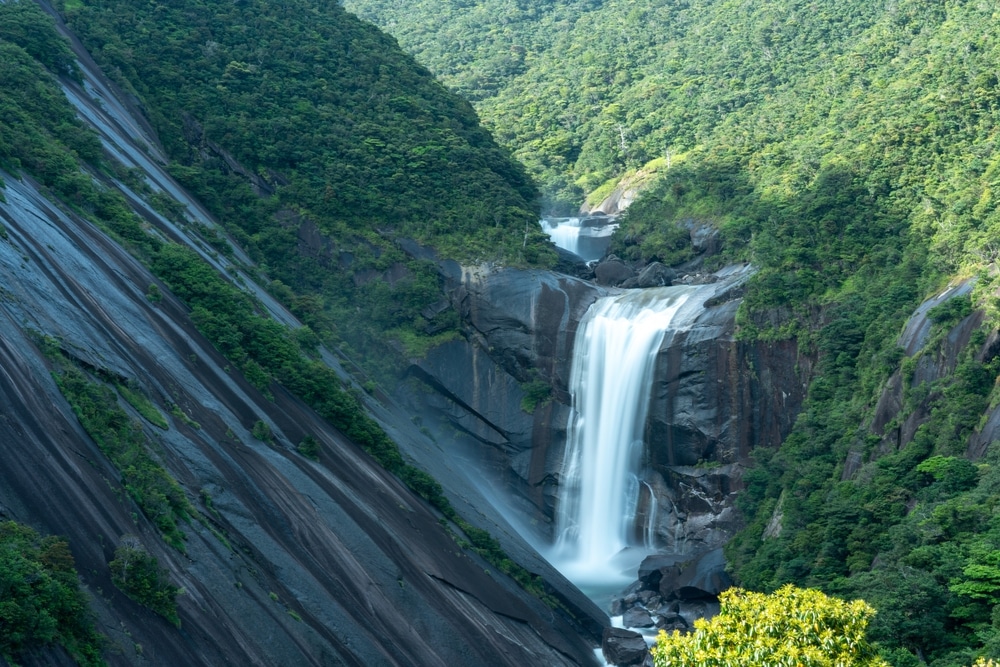
Beyond the forests, Yakushima’s coastline offers another dimension of beauty. Oko-no-Taki Waterfall crashes down a cliffside near the ocean, creating a powerful contrast to the quiet forest trails. There are also natural hot springs along the coast where visitors can soak while listening to waves break against rocks.
Each location reveals a slightly different mood of the island, yet all share the same underlying sense of untouched wilderness.
When to Visit for the Full Moss-Covered Experience
Because Yakushima receives frequent rainfall year-round, there is never truly a dry season. However, this constant moisture is precisely what keeps the moss vibrant. Spring and early summer offer comfortable temperatures and lush greenery. During these months, the forest appears especially vivid.
Summer brings warmer weather, making higher elevation hikes more accessible. However, it can also be humid. Autumn offers slightly cooler air and fewer crowds, while winter adds a quiet stillness to the island. Snow occasionally dusts higher peaks, creating a striking contrast against the deep green forest.
Rain is part of the experience here. Rather than hoping for clear skies, many seasoned visitors embrace the mist. The fog and drizzle enhance the island’s mysterious character. Waterproof clothing and proper hiking shoes are essential, but once prepared, the weather becomes an atmospheric feature rather than an inconvenience.
What Most Tourists Don’t Realize
Despite its UNESCO status, Yakushima is not heavily commercialized. Accommodation options are limited compared to major Japanese cities. Small guesthouses, traditional inns, and modest hotels dominate the landscape. This lack of overdevelopment helps preserve the island’s natural feel.
Public transportation exists but can be sparse, so renting a car often makes exploring easier. Trails are well-maintained, but visitors are expected to respect conservation guidelines. Certain areas require permits, and littering is strictly discouraged.
The pace of life on Yakushima is slower. Even the small towns feel quiet and understated. Restaurants focus on local seafood and simple, hearty dishes. There is no rush here. The island seems to invite visitors to slow down and observe rather than consume.
Is It Worth the Journey?
Reaching Yakushima requires effort. Most travelers take a flight or train to Kagoshima, followed by a ferry or small plane to the island. It is not a spontaneous day trip. Yet for those who value immersive natural beauty, the journey becomes part of the experience.
Yakushima is not for everyone. Travelers seeking nightlife, shopping districts, or luxury resorts may find it too quiet. But for hikers, photographers, and anyone drawn to ancient landscapes, it offers something increasingly rare in the modern world: a sense of deep, uninterrupted nature.
Standing beneath a cedar tree that has survived for thousands of years shifts perspective. Walking through moss so thick it muffles your steps feels grounding. Watching fog roll through the canopy reminds you how small and temporary human presence can be.
In the end, Yakushima is more than just a destination. It is an atmosphere. A feeling. A place where nature takes center stage and time seems to move differently. And once you have experienced its moss-covered forests and ancient trees firsthand, it becomes clear why so many describe it as stepping straight into a fantasy movie — only this world is entirely real.