


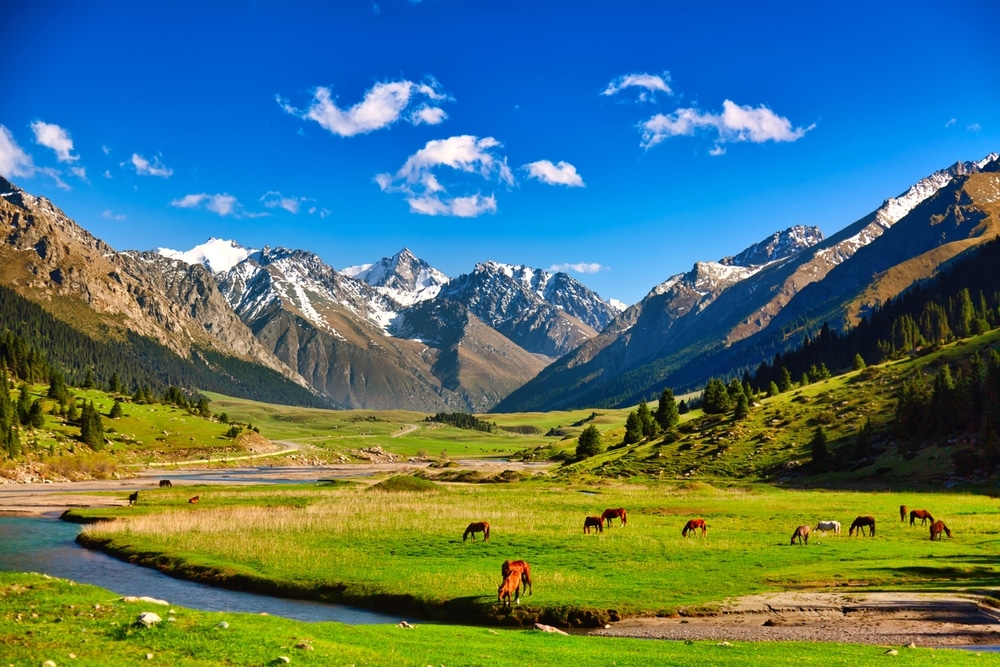
When people picture pristine wilderness, their minds often wander to the Swiss Alps, the Canadian Rockies, or perhaps the remote corners of Patagonia. But tucked deep in Central Asia lies a country that rivals all of them—quietly, humbly, and without the heavy footprints of mass tourism. Before diving into this kyrgyzstan travel guide, it’s worth understanding what makes this landscape so irresistible to travelers seeking raw, untouched nature.
With more than 2,000 alpine lakes surrounded by glacier-carved mountains, endless meadows, and nomadic culture, Kyrgyzstan feels like stepping into a world where time slows down and nature takes center stage.
The moment you arrive, you feel the altitude, the crisp air, the wide openness, and the freedom this land offers. Lakes shimmer in bright blue, turquoise, and emerald shades—almost surreal against rugged mountain peaks. Around them, herds of horses roam freely, yurts dot the green pastures, and shepherd families welcome travelers with warm tea and fresh bread. The beauty of Kyrgyzstan isn’t just in its landscapes; it’s in the feeling of stepping into a place that still lives closely with nature. This article explores its most stunning alpine lakes and offers practical insights to help you plan an unforgettable journey.
Why Kyrgyzstan’s Alpine Lakes Are So Special
Kyrgyzstan is often called the “Switzerland of Central Asia,” but in truth, it needs no comparison. Its alpine lakes have a magic all their own—shaped by glaciers, fed by mountain springs, and protected by altitude. Most of them sit above 2,000 meters, which gives them that iconic clear, jewel-like color travelers can’t stop photographing.
What makes these lakes exceptional is not just their beauty but their accessibility. In many countries, views like these require days of strenuous trekking. But in Kyrgyzstan, you can reach unforgettable scenery within a few hours by car or on horseback. Whether you’re an experienced trekker or a casual traveler, the variety of landscapes means there’s an alpine lake adventure for everyone.
And then there’s the culture: Kyrgyz people are deeply connected to their nomadic roots. Families continue to live in yurts during the warm months, tending livestock and preserving centuries-old traditions. It’s common to be offered a bowl of kymyz (fermented mare’s milk) or fresh bread as you pass through their camps. This combination of pristine nature, living tradition, and genuine hospitality makes Kyrgyzstan’s alpine lakes feel like something rare and precious.
🇰🇬 A Complete Kyrgyzstan travel guide to Exploring Alpine Lakes
This section of the kyrgyzstan travel guide outlines everything you need to know before setting off into the mountains. Traveling here is simple—but also different from many Western destinations—so a bit of preparation goes a long way.
Best Time to Visit
The alpine lake region is accessible mainly from late May to early October.
- June–July: best for wildflowers, green meadows, and mild temperatures.
- July–August: ideal for multi-day treks; most snow has melted.
- September: fewer tourists, crisp blue skies, golden grasses.
Outside these months, many roads and trails are closed due to snow and unpredictable weather.
How to Get Around
Transportation is flexible, budget-friendly, and a little adventurous.
- Marshrutkas: Shared minibuses connecting most towns. Cheap but slow.
- Private taxis: Affordable for medium distances and can be negotiated.
- Shared jeeps: Ideal for mountain passes and remote lakes.
- CBT offices (Community-Based Tourism): These exist across the country and are hugely helpful in arranging transport, guides, yurt stays, and treks.
Because roads can be bumpy and unpaved, travel times are always longer than expected. Patience is part of the journey.
What to Pack
Even in summer, the mountains get cold at night. Essentials include:
- Waterproof layers and a warm jacket
- Solid hiking boots
- Sunscreen and sunglasses (UV is strong at altitude)
- Headlamp or flashlight
- Water filter or purification tablets
- Power bank
- Cash—many mountain areas have no ATMs
If you’re planning to stay in yurts, bring warm socks and layers for sleeping.

Cultural Etiquette
Kyrgyz culture is built on hospitality. When invited into a yurt, it’s polite to accept tea and sit on the right-hand side if offered.
- Always remove your shoes before entering a yurt.
- Avoid stepping on the threshold; it’s considered disrespectful.
- Dress modestly, especially in rural areas.
- Never decline the first round of tea—you can refuse later if you’re full.
A little respect goes a long way toward building genuine human connections.
The Must-See Alpine Lakes of Kyrgyzstan
Kyrgyzstan’s alpine lakes vary widely—from enormous natural wonders to remote hidden gems. Here are the ones travelers rave about most.
Issyk-Kul — “The Pearl of Kyrgyzstan”
As the second-largest alpine lake in the world (after Titicaca), Issyk-Kul is a destination in itself. Framed by snow-dusted mountains, it never freezes—hence its name, which means “warm lake.”
The north shore is more developed, with beaches, guesthouses, and restaurants in towns like Cholpon-Ata. The south shore is quieter, more rugged, and perfect for travelers seeking mountain views with fewer crowds. The lake also offers water sports, boat rides, and archaeological sites, making it a diverse and easy base for exploration.
Song-Kul — A Nomadic Dream at 3,016m
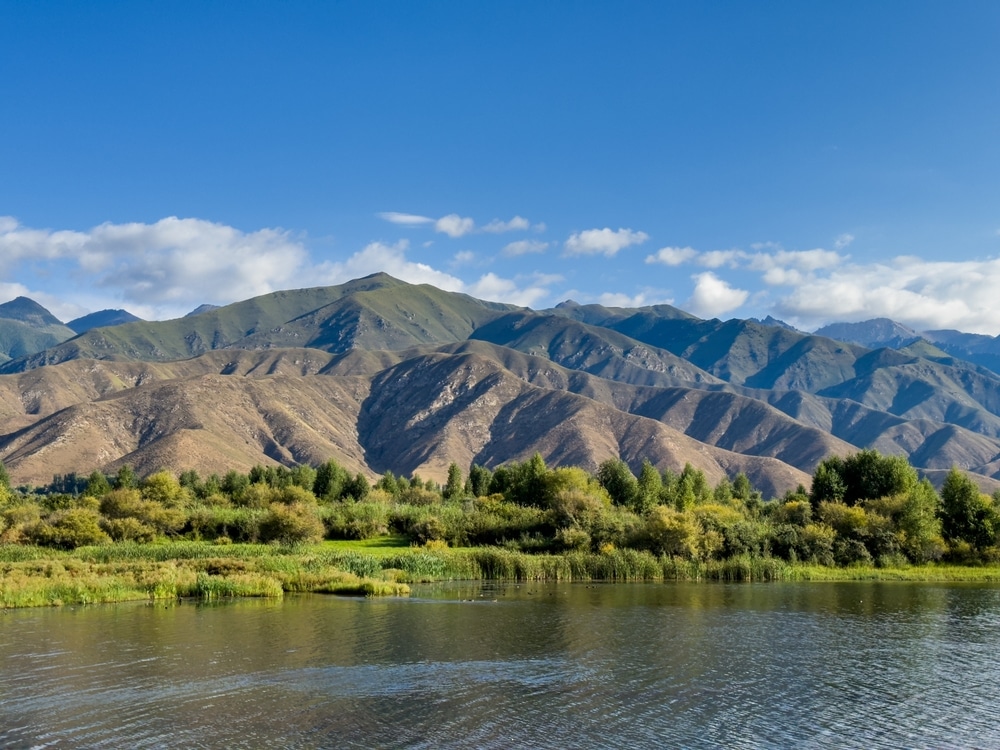
Song-Kul is a postcard come to life. This high-altitude lake sits on a vast plateau, surrounded by green fields, wildflowers, and roaming horses. Accessible only from June to September, it’s a haven for travelers wanting to experience nomadic life.
Expect yurt camps, horseback rides, and endless horizons. Nights are cold but magical—especially under a sky filled with stars. If you want a lake that feels like stepping back in time, Song-Kul is unbeatable.
Ala-Kul — The Legendary Turquoise Lake Above Karakol
One of the most famous trekking destinations in the country, Ala-Kul is accessible only on foot. But the effort is rewarded with a surreal turquoise lake perched high in the mountains.
The trek can be done in 2–3 days, though many travelers stretch it to four to soak in hot springs and side trails. Steep passes and changing weather make it challenging, but the views are unforgettable.
Kel-Suu — The Dramatic Hidden Canyon Lake
Kel-Suu is mysterious, remote, and otherworldly. Surrounded by towering cliffs in the At-Bashy region near the Chinese border, this lake sometimes “disappears” when water levels drop.
Reaching it requires a 4×4 vehicle and a border permit, but the reward is one of the most dramatic landscapes in the entire country. Horseback riding into the canyon is highly recommended.
Sary-Chelek — A Lush Biosphere Reserve
Located in a protected nature reserve, Sary-Chelek is one of the most photogenic lakes in Kyrgyzstan. Dense forests, rolling hills, and multiple smaller lakes make it ideal for gentle treks and wildlife spotting.
It’s perfect for travelers who want beauty without extreme altitude or long travel times.
Trekking Routes & Accessibility Around the Lakes
Kyrgyzstan offers treks for every level—from casual day hikes to multi-day expeditions.
- Easy: Sary-Chelek trails, parts of Issyk-Kul shoreline.
- Moderate: Song-Kul loop, short treks around Jeti-Oguz.
- Challenging: Ala-Kul trek, Kel-Suu canyon approach.
Guided treks are affordable and often include meals, transport, and overnight stays. Self-guided treks are possible for experienced hikers but require navigation skills, proper gear, and attention to weather.
Altitude is a consideration—lakes like Son-Kul and Ala-Kul can cause headaches or fatigue. Take it slow, hydrate well, and give your body time to adjust.
Staying in Yurts & Local Guesthouses
Few experiences define Kyrgyzstan like staying in a yurt. Hand-built and covered with felt, they are cozy, warm, and surprisingly comfortable.
Most yurt camps around Song-Kul and other lakes include:
- Home-cooked meals (lots of soups, bread, fresh dairy)
- Warm blankets and felt insulation
- Communal dining
- Long conversations over tea
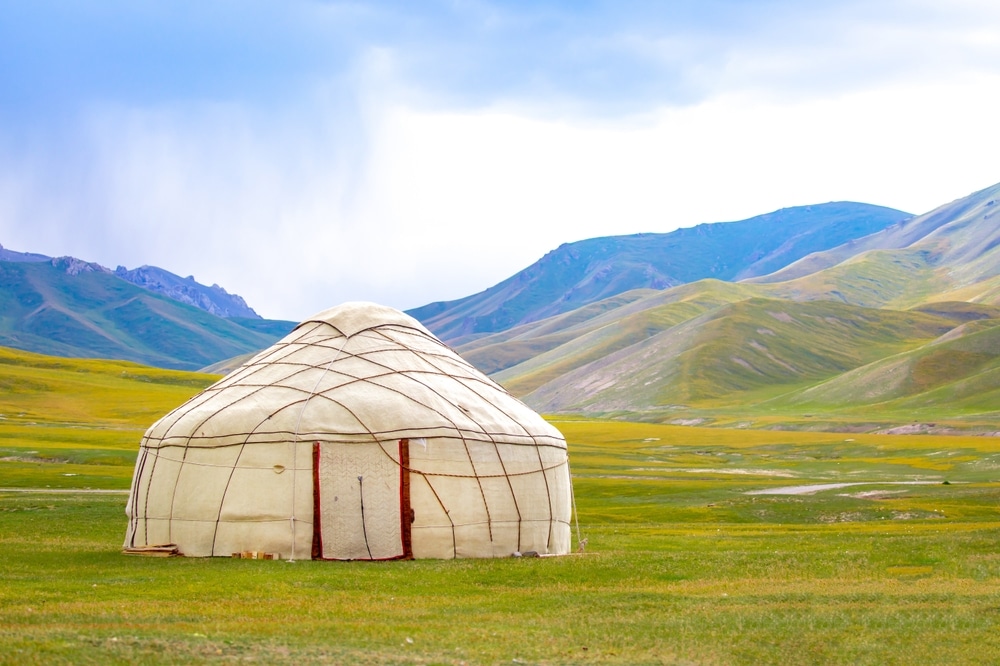
Electricity may be limited, bathroom facilities are simple, and nights can be chilly, but the experience is unforgettable. Staying in a yurt directly supports local families and preserves traditional ways of life.
Wildlife, Stargazing & Photography Opportunities
Kyrgyzstan is paradise for photographers. The combination of clear air, dramatic mountains, and mirror-like lakes creates endless compositions.
- At Song-Kul, expect perfect reflections and star-filled skies.
- At Ala-Kul, the contrast of turquoise water and grey rock is spectacular.
- Around Sary-Chelek, dense forests add texture and depth.
Wildlife includes golden eagles, ibex, foxes, and—rarely—snow leopards. Birdwatchers will find dozens of mountain species, especially near wetlands and meadows.
Travel Safety & Environmental Responsibility
While Kyrgyzstan is very safe, mountain travel requires caution.
- Weather changes quickly—always carry warm layers.
- Roads can be rough; choose experienced drivers.
- Altitude sickness is possible above 2,500m.
- Bring a small first-aid kit for cuts, blisters, or stomach issues.
Environmental responsibility is crucial in such fragile ecosystems.
- Pack out all your waste.
- Avoid contaminating water sources.
- Stick to established trails to protect the landscape.
- Be respectful when photographing people or yurts—ask first.
The goal is simple: enjoy the wilderness while preserving it for future generations.
Practical Tips for First-Time Visitors
A few travel basics can make your trip smoother and more enjoyable:
- SIM cards: O! and Beeline offer good coverage, but remote areas may have no signal.
- Cash: Always carry enough som (KGS). Card payments are rare in rural regions.
- Language: Russian is widely spoken; English less so. Learning a few Kyrgyz phrases is appreciated.
- Food: Expect hearty dishes like lagman (noodles), plov (rice with meat), and beshbarmak (noodles with boiled meat). Vegetarian options are limited but improving.
- Travel times: Distances look short on the map but take much longer due to winding mountain roads.
Being prepared lets you enjoy the beauty without stress.
Why Kyrgyzstan’s Alpine Lakes Are Worth the Journey
Kyrgyzstan is one of the world’s last great wilderness destinations, where nature is still wild and culture still deeply connected to the land. Its alpine lakes offer a perfect combination of dramatic scenery, solitude, and authentic experiences that are becoming increasingly rare in modern travel. Whether you’re trekking to hidden turquoise waters, riding on horseback across wide plains, or watching stars over a quiet yurt camp, the memories you make here will stay with you forever.
If you’re seeking a destination untouched by mass tourism and filled with natural wonder, Kyrgyzstan’s alpine lakes belong at the very top of your list. And with this kyrgyzstan travel guide, you’re ready to explore them with confidence and curiosity.