


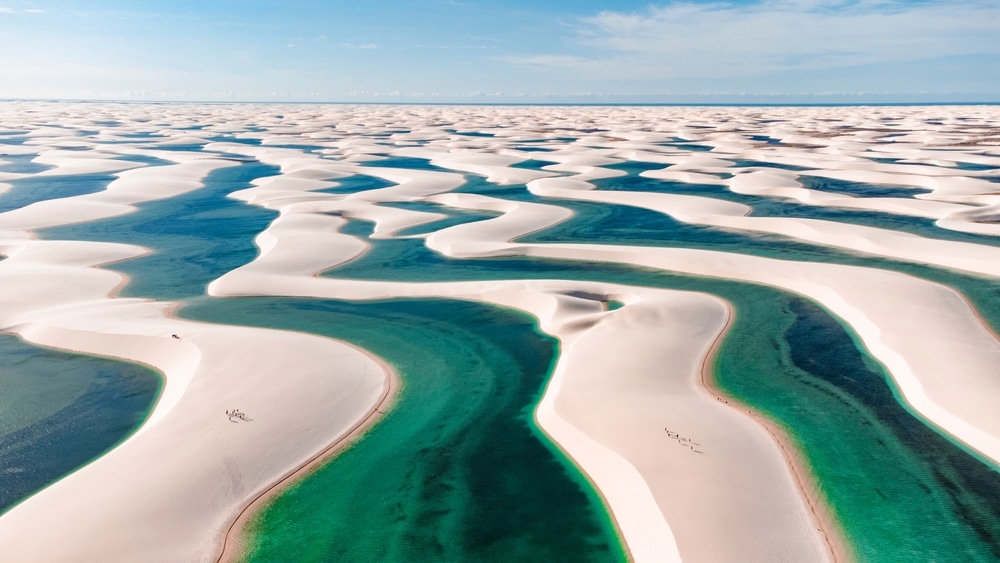
Brazil is famous for the Amazon rainforest, Carnival celebrations, and endless tropical beaches. But hidden in the northeastern part of the country lies a place so surreal it hardly seems real. Imagine miles of white sand dunes stretching toward the horizon, interrupted only by bright blue and green lagoons filled with rainwater. This breathtaking landscape is called lencois maranhenses, and it looks more like a dream than a real destination. Despite being one of the most unique natural wonders in South America, many travelers have never even heard of it. That mystery is part of what makes it so special.
The Science Behind lencois maranhenses
At first glance, this destination looks like a classic desert. There are rolling dunes, scorching sun, and barely a tree in sight. But the landscape of lencois maranhenses is not technically a desert at all. Unlike typical deserts, lencois maranhenses receives a significant amount of rainfall each year. In fact, the region gets too much rain to qualify as a desert under scientific definitions.
So what’s really going on here? The dunes are formed from sand carried inland from nearby rivers and the Atlantic Ocean. Over thousands of years, ocean currents and strong winds pushed fine white sand into the interior of Maranhão state. The result is a vast field of dunes covering more than 1,500 square kilometers.
What makes the area extraordinary is what happens during the rainy season. Because the sand sits on top of a layer of impermeable rock, rainwater cannot drain away easily. Instead, it collects in the valleys between the dunes, forming thousands of temporary lagoons. These pools can be crystal-clear, tinted turquoise, or even deep green depending on algae and sunlight.
A Desert That Fills With Rain
Every year, lencois maranhenses transforms dramatically between seasons. During the dry months, the dunes look stark and empty, shaped only by wind patterns. But once the rains arrive, usually between January and June, the landscape begins to change.
The magic of lencois maranhenses lies in this seasonal cycle. By June and July, the lagoons are often at their fullest. The contrast between the brilliant white sand and the shimmering blue water creates a scene that feels almost otherworldly. From above, it resembles a giant patchwork quilt of water and sand stitched together by nature.
The lagoons do not last forever. As the dry season returns, the water slowly evaporates under the intense Brazilian sun. By late in the year, many of the pools have disappeared entirely, leaving only rippled sand behind. This constant shift means no two visits are ever exactly the same.
Wildlife in an Unlikely Place
At first thought, it might seem impossible for life to survive here. Yet scientists studying lencois maranhenses have found a surprising variety of organisms adapted to its unusual conditions. When the lagoons form, fish suddenly appear in the water. For years, this puzzled researchers.
It turns out that some fish species lay eggs that remain dormant in the damp sand during the dry season. When the rains return and the lagoons fill, the eggs hatch. Birds quickly take advantage of this temporary feast, migrating to the area to feed and nest.
In addition to fish and birds, the surrounding ecosystems include mangroves and restinga vegetation near the coast. These environments support reptiles, insects, and small mammals. While the dunes themselves may look barren, the broader national park is rich with biodiversity.
The Best Time to Visit lencois maranhenses
Timing is everything when planning a trip to this natural wonder. Travelers come to lencois maranhenses between June and September, when the lagoons are typically full and the weather is sunny. This window offers the best chance to see the iconic blue pools at their most vibrant.
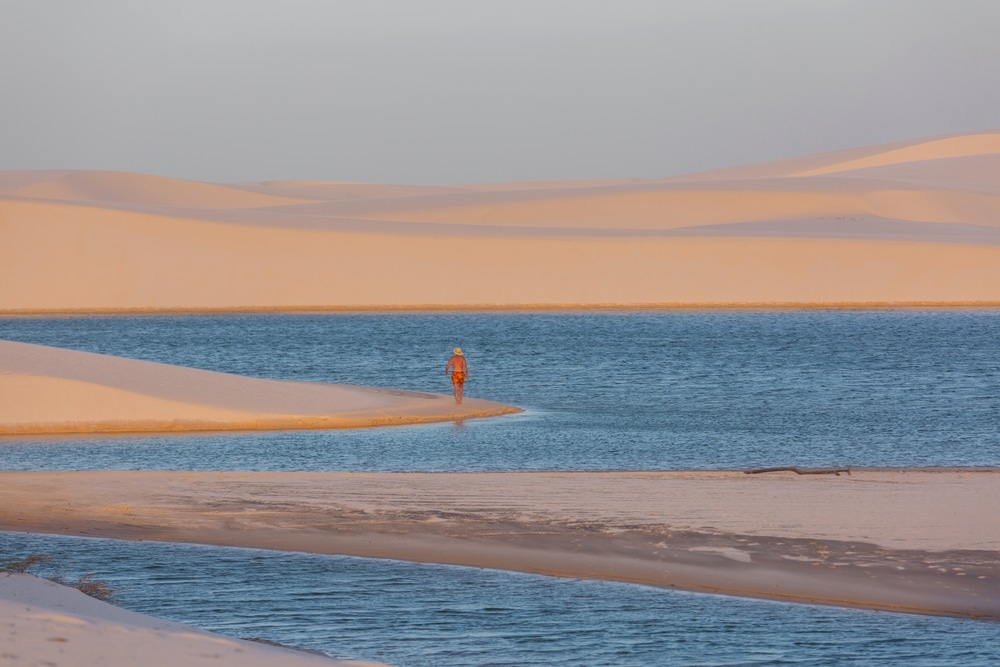
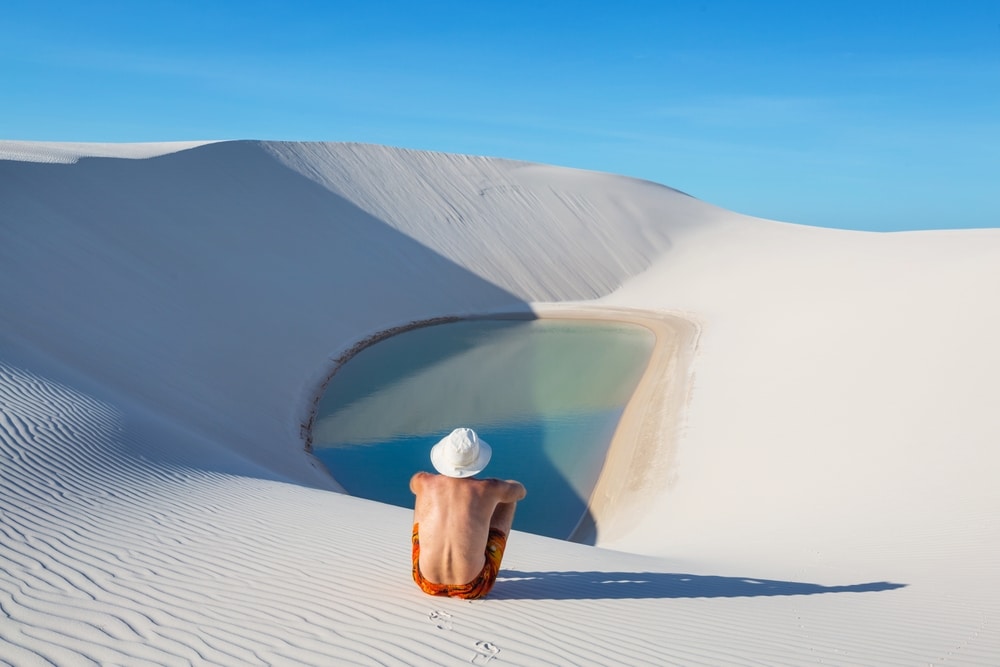
During peak season, lencois maranhenses looks like a surreal playground. Visitors can swim in the warm freshwater lagoons, hike across the dunes barefoot, and watch the sunset paint the sand in shades of gold and pink. The water is surprisingly clean and refreshing, especially after climbing the steep dunes under the tropical sun.
Getting there requires some effort. Most visitors fly into São Luís, the capital of Maranhão, and then travel by road to the small town of Barreirinhas. From there, guided tours in four wheel drive vehicles take travelers into the national park. The remote location helps preserve the landscape but also adds to the sense of adventure.
How the Lagoons Form and Disappear
Because lencois maranhenses sits near the equator, temperatures remain warm throughout the year. The rainy season is influenced by the movement of the Intertropical Convergence Zone, which brings heavy rainfall to the region during certain months. When rain falls on the dunes, the water filters down until it hits the rock layer beneath the sand.
Since the water cannot seep any deeper, it collects in the lowest points between dunes. These natural basins fill up like bathtubs. The size and depth of each lagoon depend on how much rain has fallen that year. Some lagoons stretch hundreds of meters across and are deep enough for a proper swim, while others are shallow and short lived.
As evaporation increases during the dry season, the lagoons shrink. Wind reshapes the dunes constantly, sometimes covering old basins and creating new ones. It is a living, breathing landscape shaped by a delicate balance of water, wind, and sand.

Local Communities and Culture
For generations, families around lencois maranhenses have adapted to its unique rhythms. Small communities live near the park boundaries, relying on fishing, small scale agriculture, and increasingly tourism. Life here is closely tied to the seasons.
During the rainy months, when the lagoons are full and visitors arrive, tourism provides income for local guides, drivers, and guesthouse owners. In quieter months, residents return to traditional livelihoods. The culture of Maranhão is influenced by Indigenous, African, and Portuguese heritage, creating a rich blend of music, cuisine, and festivals.
Visitors often describe the hospitality as warm and welcoming. Exploring the dunes during the day and enjoying local dishes like fresh seafood and rice dishes in the evening creates a travel experience that feels both adventurous and grounded in community.
Why It Still Feels Like a Secret
Part of the reason lencois maranhenses remains less famous than other Brazilian attractions is its remote location. It lacks the international marketing power of Rio de Janeiro or the Amazon. Reaching the park takes time and planning, which naturally limits mass tourism.
That relative isolation has benefits. The dunes remain remarkably clean, and strict regulations help protect the fragile environment. As a designated national park since 1981, the area is safeguarded against large scale development. There are no resorts built directly on the dunes, and access is controlled to minimize environmental damage.
For travelers willing to make the journey, the reward is a landscape that feels untouched and expansive. Standing on top of a dune with nothing but wind and water around you creates a rare sense of solitude in a crowded world.
Protecting a Fragile Ecosystem
Environmental groups warn that lencois maranhenses could face challenges in the future due to climate change and shifting rainfall patterns. Since the lagoons depend entirely on seasonal rain, any major change in precipitation could alter the delicate balance that defines the park.
Sustainable tourism plays an important role in conservation. By following park rules, staying with licensed guides, and respecting wildlife, visitors help ensure the landscape remains intact. Education is also key. The more people understand how this ecosystem works, the more likely they are to support efforts to protect it.
Brazilian authorities continue to monitor the park, studying water levels, dune movement, and biodiversity. Preserving this natural phenomenon requires cooperation between scientists, local communities, and travelers alike.
In a country overflowing with natural beauty, it takes something truly extraordinary to stand out. Yet lencois maranhenses manages to do exactly that. Its endless white dunes and temporary lagoons challenge our expectations of what a desert should look like. It is a place shaped by patience, rain, and time, constantly changing yet always mesmerizing. For those who venture off the usual tourist path, this hidden corner of Brazil offers a reminder that the planet still holds surprises. Few landscapes capture the imagination quite like lencois maranhenses, a secret desert where water and sand exist in perfect harmony.
Not done yet? Do you want more inspiration for your next amazing vacation? Then visit our epic destination page here.