


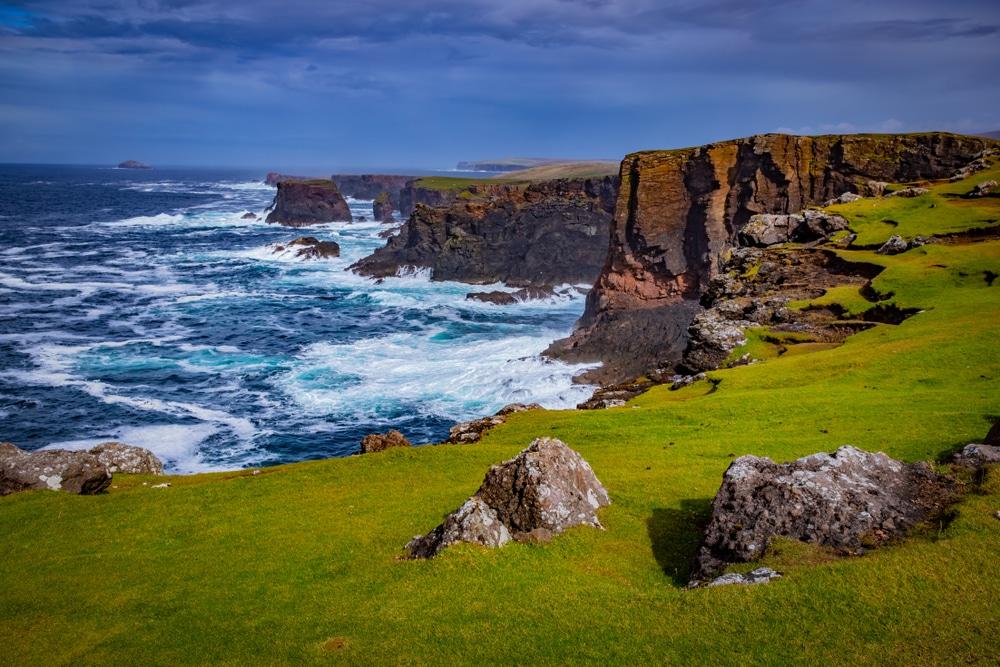
Europe is full of beautiful islands, but few places feel as wild, remote, and fascinating as the shetland islands. Located far north of mainland Scotland, this rugged archipelago sits where the North Sea meets the Atlantic Ocean. The landscape is dramatic, the wildlife unforgettable, and the culture shaped by centuries of seafaring and Viking influence. Travelers who make the journey north discover steep sea cliffs, roaring waves, and colonies of seabirds that fill the sky. Yet beyond the scenery lies something even more interesting: a living history where Norse traditions, Scottish heritage, and island life combine in a place unlike anywhere else in Europe.
The Northern Edge of Britain
The shetland islands lie roughly 170 kilometers north of mainland Scotland, closer to Norway than to London. This remote position has shaped everything about life there. For centuries, the islands served as a maritime crossroads for fishermen, traders, and Norse explorers navigating the rough northern seas.
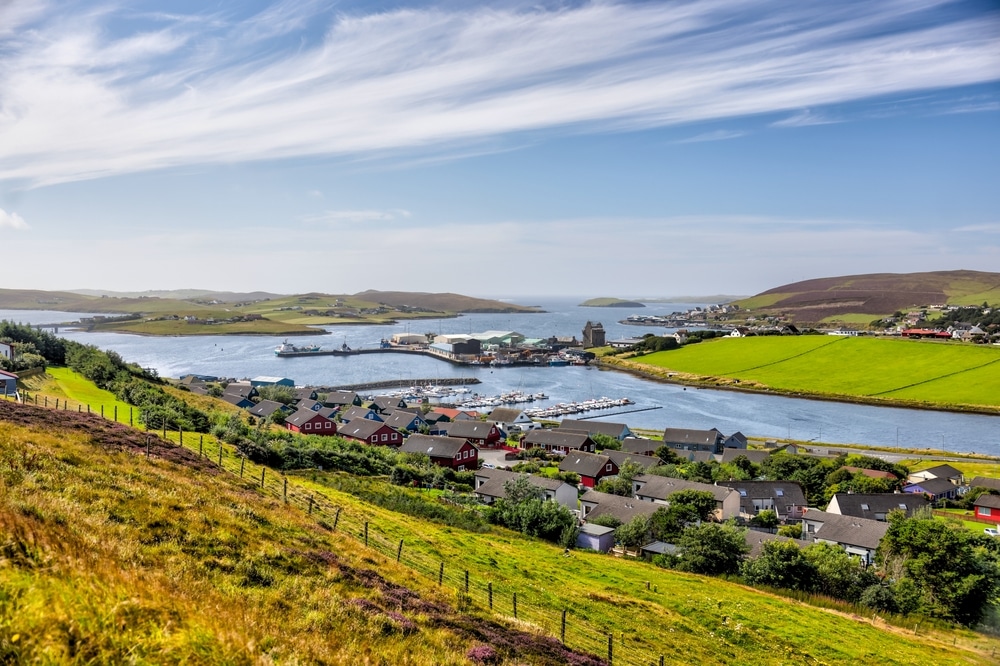
The archipelago consists of more than 100 islands, though only about 15 are inhabited today. The largest island is known simply as Mainland, where the capital town Lerwick sits along a natural harbor. Despite the small population, the shetland islands cover a surprisingly large area of rugged landscapes, peat-covered hills, and dramatic coastlines.
Wind and weather dominate daily life. Strong Atlantic storms roll across the islands during winter, and even summer days can shift quickly between sunshine and mist. Yet this challenging environment is exactly what has preserved the islands’ raw beauty. There are few large cities, minimal industry, and vast open spaces where nature still feels untamed.
Cliffs That Rival the World’s Greatest Coastlines
One of the first things visitors notice is the coastline. The shetland islands are famous for towering cliffs carved by thousands of years of crashing waves. Some of the most impressive are found at Eshaness, where volcanic rock formations rise sharply above the Atlantic.
Walking along these cliffs can feel both thrilling and humbling. The wind whistles across the grass-covered edges while waves explode against the rocks far below. These cliffs are not only dramatic landscapes but also vital nesting sites for seabirds.
In many places, narrow sea inlets cut deep into the coastline. Locals call these “geos,” and they create natural amphitheaters where waves surge inward with incredible force. During stormy days, the power of the ocean becomes obvious, reminding visitors why the shetland islands have always been closely tied to the sea.
The cliffs also hide caves, arches, and rock stacks that photographers love to capture. Each bend in the coastline reveals another wild view, making the islands feel like an endless natural gallery shaped by wind and water.
Wildlife Spectacles in the shetland islands
Wildlife is one of the main reasons travelers journey so far north. The shetland islands are home to some of the largest seabird colonies in Europe, turning the cliffs into bustling natural cities during the summer months.
Puffins are perhaps the most famous residents. With their colorful beaks and clumsy landings, they attract birdwatchers from around the world. Thousands gather on grassy cliff edges, nesting in burrows and flying out to sea to catch fish. Watching puffins return to their nests with sand eels in their beaks is a highlight for many visitors.
But puffins are only the beginning. Gannets, guillemots, kittiwakes, and fulmars all crowd the cliffs. In some places the air becomes filled with swirling birds, their calls echoing across the rock faces.
Beyond birds, the surrounding waters host seals, otters, and even whales. Orcas occasionally pass through the coastal channels, hunting fish and seals in the cold northern waters. Encounters like these remind visitors that the shetland islands are part of a living marine ecosystem.
The Viking Legacy That Still Shapes Island Culture
Long before Scotland ruled the islands, Norse settlers arrived from Scandinavia. Vikings began settling the shetland islands around the 8th and 9th centuries, bringing their language, customs, and seafaring traditions.
For hundreds of years the islands were governed by Norway rather than Scotland. It wasn’t until the 15th century that control officially shifted to the Scottish crown. Yet the Viking influence never disappeared.
Many local place names still come from Old Norse. Words describing hills, bays, and farms often trace back to Viking vocabulary. Even today, the dialect spoken by residents contains hints of Scandinavian linguistic heritage.
One of the most famous cultural events reflecting this past is the Up Helly Aa festival in Lerwick. Every winter, locals dress as Vikings, march through the streets with torches, and ceremonially burn a replica Viking longship. The celebration connects modern island life with the ancient Norse identity that shaped the shetland islands centuries ago.
This deep historical connection gives the islands a character that feels slightly different from the rest of Scotland. Visitors often notice the Nordic atmosphere in architecture, traditions, and even storytelling.
Life on the Edge of the North Sea
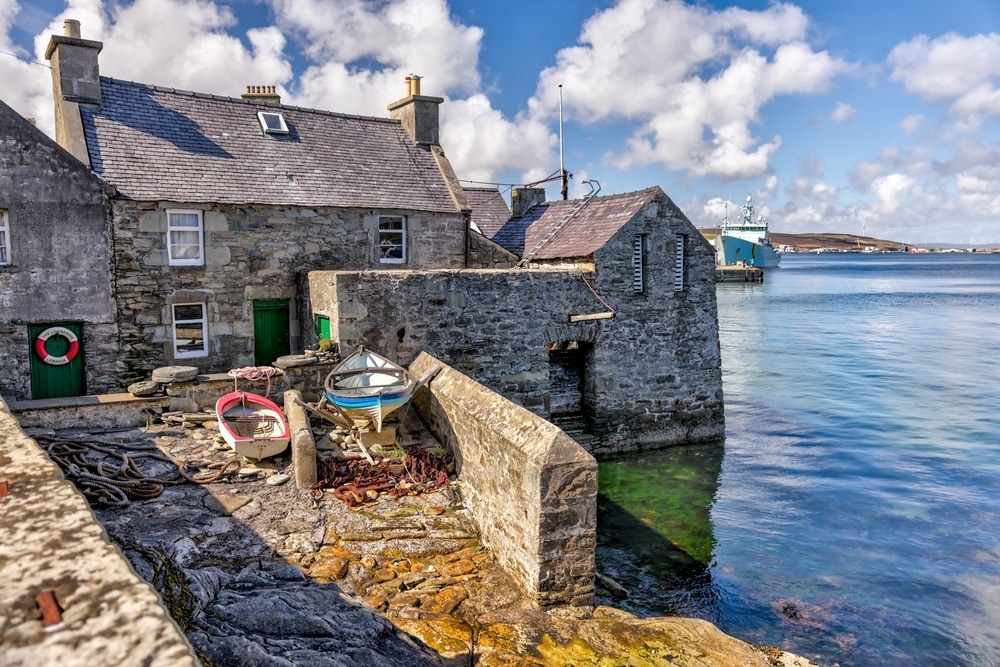
Living in such a remote location requires resilience and strong community ties. The people of the shetland islands have long depended on fishing, farming, and the sea for survival.
Fishing remains a major industry. The cold northern waters provide abundant catches of mackerel, haddock, and shellfish. Lerwick Harbor often bustles with fishing vessels returning from long trips across the North Atlantic.
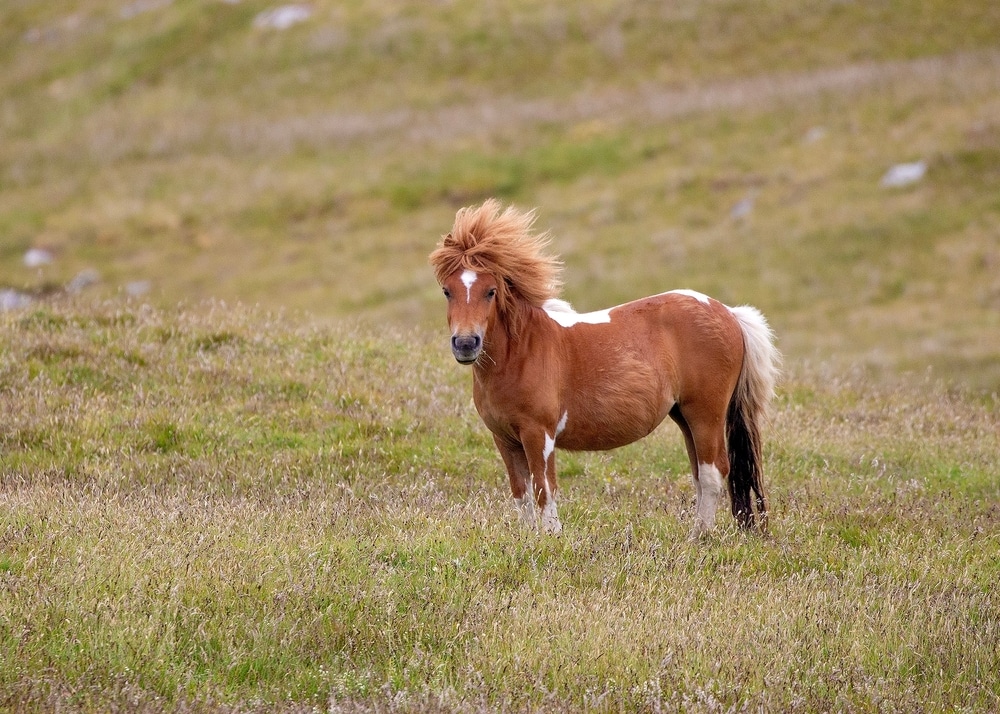
Crofting is another traditional way of life. Small-scale farms raise sheep and grow hardy crops suited to the cool climate. The famous Shetland sheep produce soft wool used in traditional knitwear known worldwide.
Despite modernization, many aspects of daily life remain tied to the rhythms of nature. Long summer days bring nearly endless daylight, while winter nights can stretch for hours under dark skies.
This isolation has also helped preserve strong local traditions. Music, storytelling, and community gatherings remain central to life across the shetland islands, creating a culture that values both heritage and hospitality.
Exploring the Landscapes of the shetland islands
Adventure seekers find endless opportunities across the islands. Hiking trails wind along cliffs, across moorlands, and past ancient archaeological sites. Every island has its own personality, from quiet farmland to rugged volcanic coastlines.
One remarkable destination is the island of Unst, the northernmost inhabited island in the United Kingdom. Here visitors can explore dramatic cliffs, Viking heritage sites, and peaceful beaches often visited by seals.
Another fascinating location is Jarlshof, an archaeological site revealing thousands of years of human settlement. Layers of ruins show how people lived here from the Bronze Age through the Viking era and into medieval times.
The natural beauty extends inland as well. Rolling hills covered with heather and peat create vast open landscapes perfect for walking and wildlife spotting. Even a simple drive across the shetland islands can reveal stunning views of sea lochs, quiet villages, and grazing sheep.
Because tourism remains relatively small compared to other destinations, visitors often experience these landscapes in peaceful solitude. That sense of space and quiet is part of the islands’ magic.
Why These Islands Feel So Different
What makes the shetland islands truly special is the way nature, history, and culture blend together. Few places in Europe combine such dramatic scenery with such a rich heritage.
The islands feel wild but welcoming. You can watch puffins on towering cliffs in the morning, explore Viking ruins in the afternoon, and end the day listening to traditional fiddle music in a local pub.
Even the pace of life feels different. Without big crowds or urban noise, visitors quickly adjust to the slower rhythm of island living. Weather, tides, and daylight shape each day in ways that city life rarely allows. For many travelers, the shetland islands represent something increasingly rare: a place where nature still dominates the landscape and ancient traditions remain part of everyday life.
Traveling to the far north of Scotland reveals a side of Europe many people never see. The shetland islands offer towering cliffs, thriving wildlife colonies, deep Viking heritage, and a resilient island culture shaped by centuries of life at sea. Visitors come for the puffins and dramatic coastlines but often leave with a deeper appreciation for the people and traditions that define this remote archipelago. In a world filled with busy destinations, the shetland islands remain wonderfully untamed, inviting travelers to slow down, explore rugged landscapes, and experience a place where history and nature continue to thrive side by side.
Not done yet? Do you want more inspiration for your next amazing vacation? Then visit our epic destination page here.